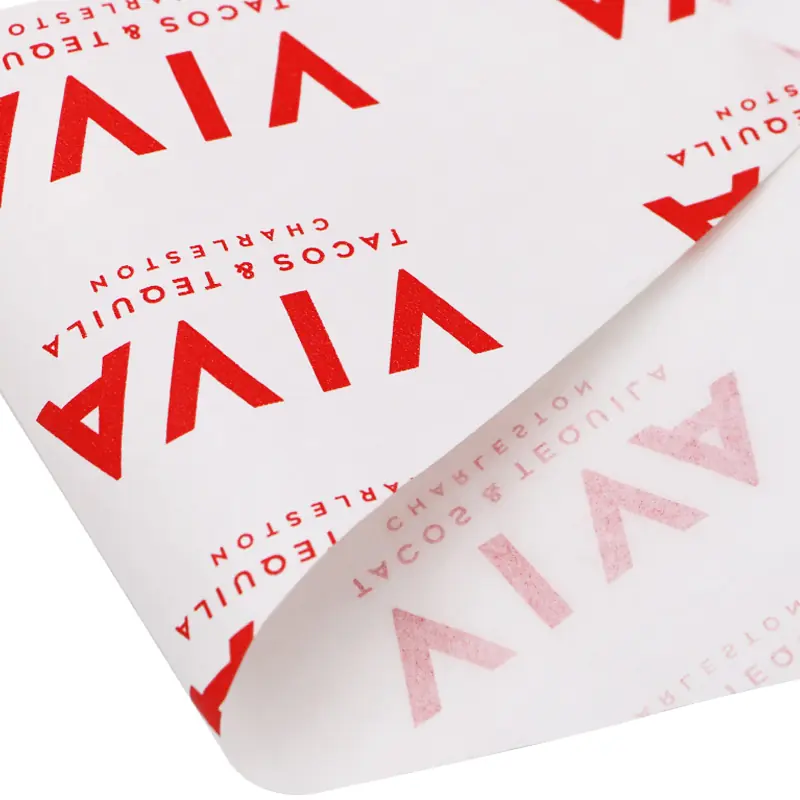
Is Printed Greaseproof Paper Environmentally Friendly? What Food Packaging Buyers Usually Ask
Five or six years ago, conversations about greaseproof paper focused on printing, cost, and lead time. Today, one topic appears in almost every discussion: is the paper environmentally friendly? We hear this from restaurants, bakery chains, food distributors, and private-label brands. What they usually want is practical: packaging that works, looks good, and supports sustainability goals. Over the past few years, we've seen food brands pay much closer attention — especially when replacing plastic-based solutions or updating packaging programs.
TL;DR
Five or six years ago, conversations about greaseproof paper focused on printing, cost, and lead time. Today, one topic appears in almost every discussion: is the paper environmentally friendly?
The First Question We Ask
When a customer asks for environmentally friendly greaseproof paper, we usually respond with another question: What environmental requirement are you trying to achieve? Different customers may mean different things. Some are looking for recyclable packaging, plastic reduction, FSC-certified paper, food-safe materials, or brand positioning. Without understanding the objective, it's difficult to recommend the right solution.
Not All Eco-Friendly Requests Are the Same
One common misunderstanding: treating environmental packaging as a single category. In reality, there are several separate considerations. Recyclability — some customers want paper that can enter recycling streams. Responsible sourcing — others focus on where paper fibers come from.
Plastic reduction — some projects aim to reduce plastic usage. Brand communication — many food businesses want packaging that visibly supports their sustainability message. These goals are related but not identical.
Why More Food Brands Are Switching from Plastic-Based Packaging
A trend we've noticed across many food packaging discussions: a gradual move away from certain plastic formats. Some brands respond to customer expectations, some to retail requirements, others to broader company sustainability objectives. For smaller food brands, packaging becomes part of the brand story — customers often see the wrapping paper before they taste the product. That first impression matters.
Balancing Sustainability and Performance
One thing we've learned from food packaging projects: sustainability alone rarely determines material selection. Performance still matters. Customers need paper that can handle grease, maintain appearance, work efficiently, and support brand presentation. If packaging fails during actual use, environmental benefits become hard to appreciate.
The most successful projects strike a balance between environmental goals and functional requirements.
Why Food Applications Matter
The same greaseproof paper doesn't work equally well for every product. Bakery products often require moderate grease resistance. Sandwich packaging needs a different balance between grease resistance and flexibility. Fried foods place greater demands on the paper barrier.
We always recommend discussing food applications before specifications — the product itself determines what options are realistic.
What Buyers Ask About Printing Inks
Customers sometimes ask: does printing make the paper less environmentally friendly? The answer depends on the full specification. In practice, discussions include print coverage, brand artwork, material selection, and packaging objectives. The best approach is evaluating the complete packaging system rather than focusing on a single component like ink.
What Has Changed in Recent Years
Sustainability questions now arrive much earlier in the project. Previously, environmental conversations happened near the end. Today, many buyers raise the topic during the first conversation. What material options are available?
What certifications? How will packaging support company goals? This shift has influenced the types of projects we work on and the questions customers ask.
What We Recommend to Food Packaging Buyers
Based on our experience: first, understand the real objective — avoid using "eco-friendly" as a generic term, define specific goals. Second, consider the food application — packaging performance should remain a priority. Third, discuss sustainability early — material selection becomes much easier when environmental requirements are known from the beginning. At Wise Packaging, discussions about printed greaseproof paper increasingly include sustainability alongside performance, branding, and production requirements.
The goal is helping customers find packaging that works in real-world food service environments while supporting their business objectives.
Conclusion
Environmental discussions have become a normal part of food packaging projects. For buyers evaluating printed greaseproof paper, the important question isn't whether sustainability matters — it's how sustainability fits alongside performance, branding, and daily operational requirements. The best decisions are made when all those factors are considered together. For greaseproof paper solutions, visit Wise Packaging.
EU PPWR Update: Greaseproof Paper and End-of-Life
The EU PPWR, rolling out from 2025 through 2027, makes recyclability and reduced packaging waste mandatory considerations for EU-bound packaging. For food-grade greaseproof paper, the relevant question is not 'is it paper?' but 'is it a single, separable material that a recycling facility can actually process?'
Plain (uncoated) greaseproof paper is a single-material substrate and the most straightforward to recycle. Coated variants tell a more local story: silicone-coated sheets are single-material paper with a thin release layer, while PE-coated sheets add a plastic barrier and behave more like a paper-plastic composite at end of life. Whether either coating is accepted in a given market's paper stream depends on local recycling infrastructure - there is no single global answer.
We supply plain, silicone-coated, and PE-coated greaseproof, and we provide a material-composition report for each so buyers can evaluate recyclability under their destination market's rules. If the simplest end-of-life profile is your priority, plain greaseproof is the default we recommend. You can review the compliance documentation we provide for the standards and test reports behind these materials.
Frequently Asked Questions
Is printed greaseproof paper environmentally friendly?
It depends on material specs, sourcing, printing requirements, and local waste-management systems. Evaluate the complete packaging solution, not just one factor.
Can printed greaseproof paper replace plastic packaging?
In some food packaging projects, businesses explore paper-based alternatives as part of broader plastic reduction reviews.
Does custom printing affect sustainability?
Printing is one of several factors to consider when evaluating the environmental profile of a packaging project.
Why do manufacturers ask about food products first?
Different foods create different packaging requirements, which directly influence material and printing recommendations.
What should I discuss with a greaseproof paper supplier?
Food application, packaging goals, branding requirements, order volume, and sustainability objectives are good starting points.
How can food brands make better packaging decisions?
Evaluate packaging performance, customer experience, branding, and environmental goals together rather than in isolation.
Need food-safe greaseproof paper?
Tell us your use case and volume — we’ll recommend the right coating (silicone or PE) and confirm MOQ.
Sales Manager at WiseInco · 15+ years in packaging paper industry
Helping global brands source FSC-certified gift wrapping, tissue, kraft, and greaseproof paper from our 50,000 m² factory in Dongguan, China. 5,000+ containers exported to 30+ countries annually.