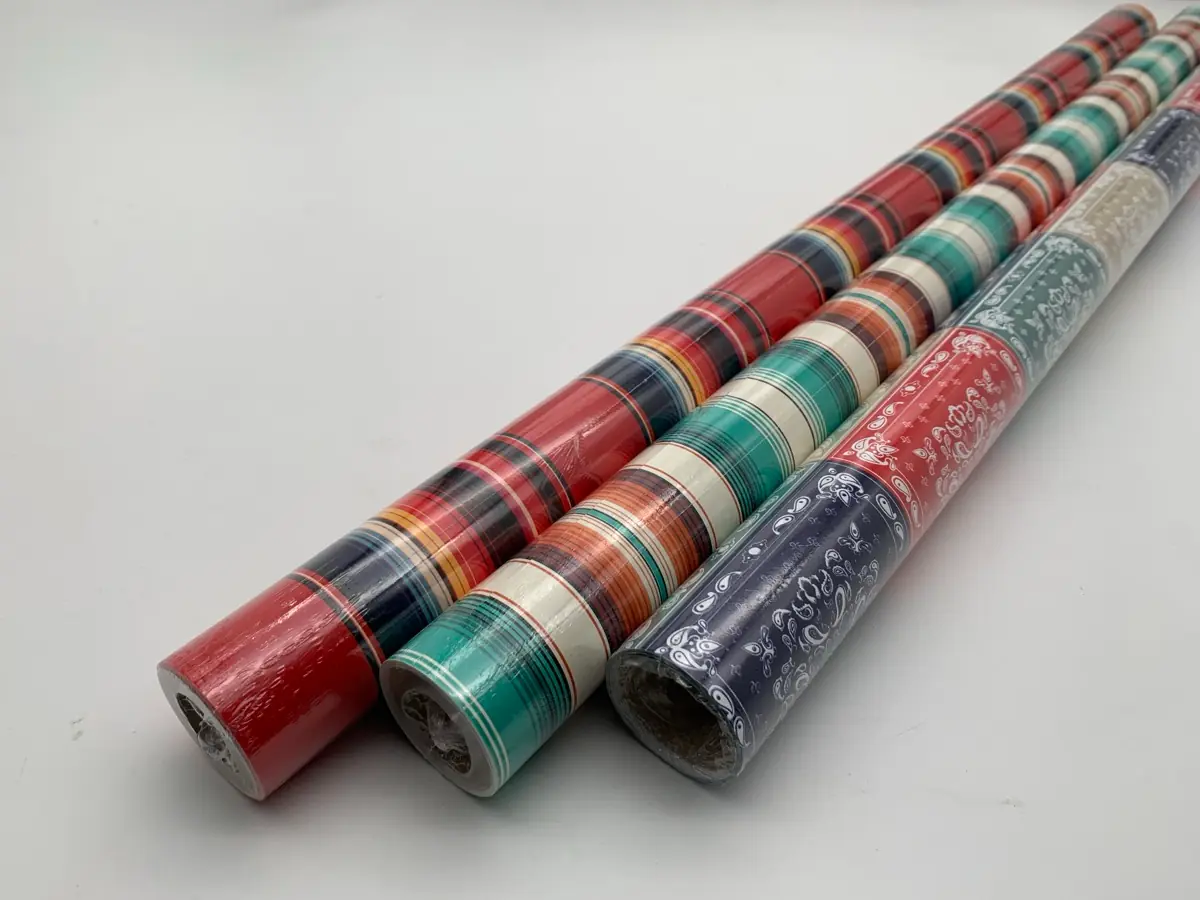
Why More Brands Are Choosing White Kraft Paper Instead of Coated Paper
One question we've heard more frequently over the past few years: should we use coated paper or white kraft paper? For many packaging buyers, both can look similar at first glance — both can be printed, both can be converted into wrapping or packaging paper. However, once we start discussing how the packaging will actually be used, the differences become much more important. In many projects, the decision has less to do with cost and more to do with brand positioning.
TL;DR
White kraft and coated paper look similar on a specification sheet but behave differently: white kraft is uncoated, so it prints with a more natural, less glossy result and supports an unbleached, recyclable story, while coated paper holds sharper colour and finer detail. The choice usually follows brand positioning rather than price. Ask how the paper prints before deciding.
Why Customers Consider White Kraft Paper
Most customers initially come to us with one of two objectives: a more natural packaging appearance, or a stronger sustainability message. White kraft paper often becomes part of that conversation because it offers a balance between visual cleanliness and a paper-based appearance. Unlike brown kraft paper, the surface allows logos and graphics to stand out more clearly while maintaining a more natural feel than many coated papers.
A Typical Packaging Discussion
Not long ago, we worked on a wrapping paper project for a customer considering several paper options. Initially they planned to use coated paper because they wanted strong print quality. After reviewing samples, the conversation changed. The customer liked the printing on coated paper, but the packaging looked very similar to products already available in their market.
White kraft paper created a different impression — cleaner, more natural, and more aligned with the brand image they wanted. The decision ultimately had little to do with printing technology. It was a branding decision.
White Kraft Paper Is Not Just About Sustainability
Many buyers automatically associate white kraft paper with environmental packaging. That's understandable. However, from a factory perspective, customers choose it for several different reasons. Brand image — more brands want packaging that feels less industrial and more authentic.
Print performance — the white surface supports strong logo visibility and clean graphic presentation. Product positioning — for some businesses, white kraft paper communicates quality without appearing overly premium or commercial.
Questions We Ask Before Recommending White Kraft Paper
Before recommending any material, we normally ask: How will the packaging be used? Gift wrapping, retail, or food? Each application may need different specifications. What type of printing is required?
Simple logo printing creates different requirements than full-color designs. What image is the brand trying to communicate? This question often influences the decision more than technical specifications.
What Buyers Sometimes Get Wrong
One misunderstanding we occasionally see: assuming all kraft paper behaves the same way. In reality, white kraft paper, brown kraft paper, and coated paper can produce very different visual results even with identical artwork. This is why we strongly recommend reviewing physical samples. A paper that looks perfect on screen may create a different impression once produced.
The projects that perform best are those where the material supports the overall brand experience.
At Wise Packaging, white kraft paper projects typically begin with discussions about branding rather than paper grades. Once we understand packaging goals, product type, printing requirements, and customer expectations, recommending suitable materials becomes much easier.
What Actually Drives the Choice Between White Kraft and Coated Paper
White kraft and coated paper are often confused because both can look bright and smooth. White kraft is about the base fibre; coating is a surface layer added on top — they are not the same axis.
The right call depends on the finish you want, the barrier you need, and how the paper will be printed and recycled. We help separate 'looks glossy' from 'needs a barrier'.
Visual finish: coated gives a gloss or silk surface; uncoated white kraft stays matte and tactile.
Barrier need: a coating can add grease or water resistance that plain kraft does not — relevant for food.
Print detail: coating stabilises ink; uncoated needs ink tuned to the fibre.
Recyclability: coatings vary — some are repulpable, some are not; match to your market's rules.
Cost driver: coating is a process step, not a flat percentage — volume and method set the gap.
What White Kraft Changes
White kraft paper is becoming a popular choice not simply because of sustainability trends, but because it helps brands create a specific packaging experience. For businesses evaluating packaging materials, the question shouldn't be "Which paper is best?" but "Which paper best supports our product and brand?" In many cases, white kraft paper provides an effective balance between branding, print quality, and practical performance.
Frequently Asked Questions
What is white kraft paper used for?
Gift wrap, retail bags, box lining and printed brand collateral. Its advantage is a white or near-white surface that still behaves like kraft: strong, creasable and printable without the plastic feel of a coated sheet. It runs 40 to 120 gsm in our range, covering everything from a light wrap to a bag that has to carry weight.
Is white kraft paper suitable for custom printing?
Yes, and the white base is the reason. Transparent inks hold their intended colour far better on a bleached or semi-bleached sheet than on brown kraft, so Pantone matching is realistic and reversed-out type stays legible. The surface is uncoated, so ink absorbs and the result looks softer than on a coated sheet, which is usually the point.
What's the difference between white kraft paper and coated paper?
The surface treatment, and everything that follows from it. White kraft is uncoated, absorbs ink, and reads matte and natural; it creases cleanly and hides scuffs. Coated paper carries a mineral layer that holds dense colour and fine detail but shows every scuff and can crack along a hard fold. Neither is better; they fail differently.
Is white kraft paper a good choice for gift packaging?
For most programmes, yes, because it folds well, takes a print and reads considered rather than promotional. It is less suitable where the artwork needs photographic colour or a gloss finish, since an uncoated surface cannot deliver that. For a brand whose identity is restrained, it usually outperforms a coated sheet in the hand.
Should I request samples before choosing a paper?
Yes, and ask for the sample folded rather than flat. A flat swatch shows colour and texture but not the two things that decide the choice: how the sheet creases at a box corner and how it looks once wrapped. Request the same artwork on both candidates if you can, then judge them in daylight rather than under office lighting.
Is there a middle option between uncoated kraft and fully coated stock?
Yes, one-side-coated grades. The coated face takes fine print and dense colour while the reverse stays kraft, so the sheet prints well outside and looks natural inside. It costs more than uncoated and less than a double-coated grade. Ask for a printed sample on both faces, because the uncoated back is what the recipient sees when the parcel comes open.
Building a packaging experience, not just a box?
Browse more packaging insights and real brand examples on the blog.
Sales Manager at WiseInco · 15+ years in packaging paper industry
Helping global brands source FSC-certified gift wrapping, tissue, kraft, and greaseproof paper from our 50,000 m² factory in Dongguan, China. 5,000+ containers exported to 30+ countries annually.
8 packaging mistakes we see from first-time custom wrapping paper buyers — incomplete specs, screen vs print color, ignoring storage, late planning. Learn.
Custom printed paper vs standard paper: a factory-direct comparison covering cost, branding impact, production lead times, MOQ, and when to invest in custom.