Custom Printed Paper vs Standard Paper: What Packaging Buyers Should Know Before Ordering
When sourcing packaging materials, many businesses face a common question: should we use standard packaging paper or invest in custom printed paper? At first glance, standard paper seems more economical — it is readily available and often requires no design work. But from a manufacturer's perspective, this decision affects far more than packaging cost. It influences brand recognition, customer experience, product presentation, and long-term marketing effectiveness. As a factory producing custom wrapping paper for global clients, we've watched dozens of brands make this transition — and the ones who switch to custom printing typically see a measurable uptick in repeat orders within their first quarter. In this guide, we'll compare the two options and help you make an informed decision.
TL;DR
When sourcing packaging materials, many businesses face a common question: should we use standard packaging paper or invest in custom printed paper? At first glance, standard paper seems more economical — it is readily available and often requires no design work.
Understanding Standard Packaging Paper
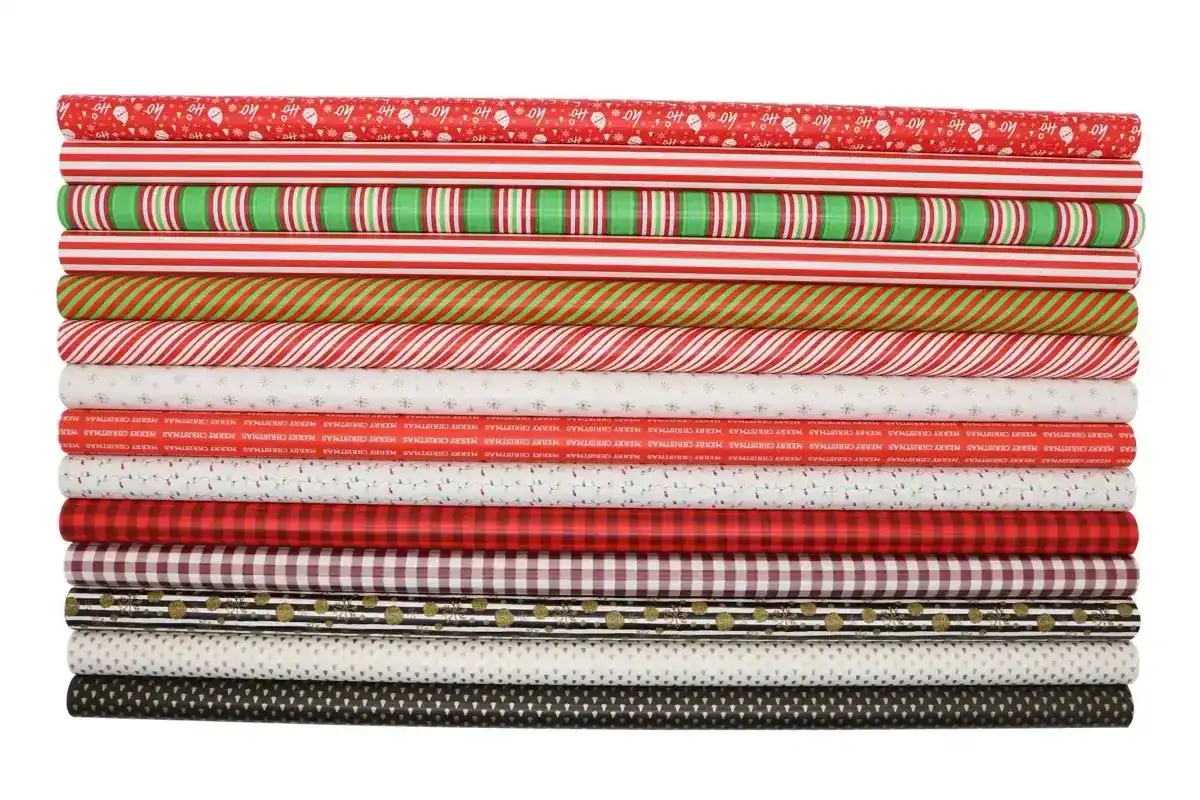
Standard packaging paper refers to paper products produced with generic designs, solid colors, or no printing at all. Common examples include plain white tissue paper, brown kraft paper, single-color wrapping paper, and generic packaging paper rolls. These products are widely available and require no custom setup. Because they are manufactured in large volumes for general use, standard paper is often selected for budget-conscious projects, basic shipping applications, temporary packaging needs, and small-volume operations.
Standard paper provides an effective and affordable solution — but it offers limited opportunities for branding and customer engagement.
What Is Custom Printed Paper?
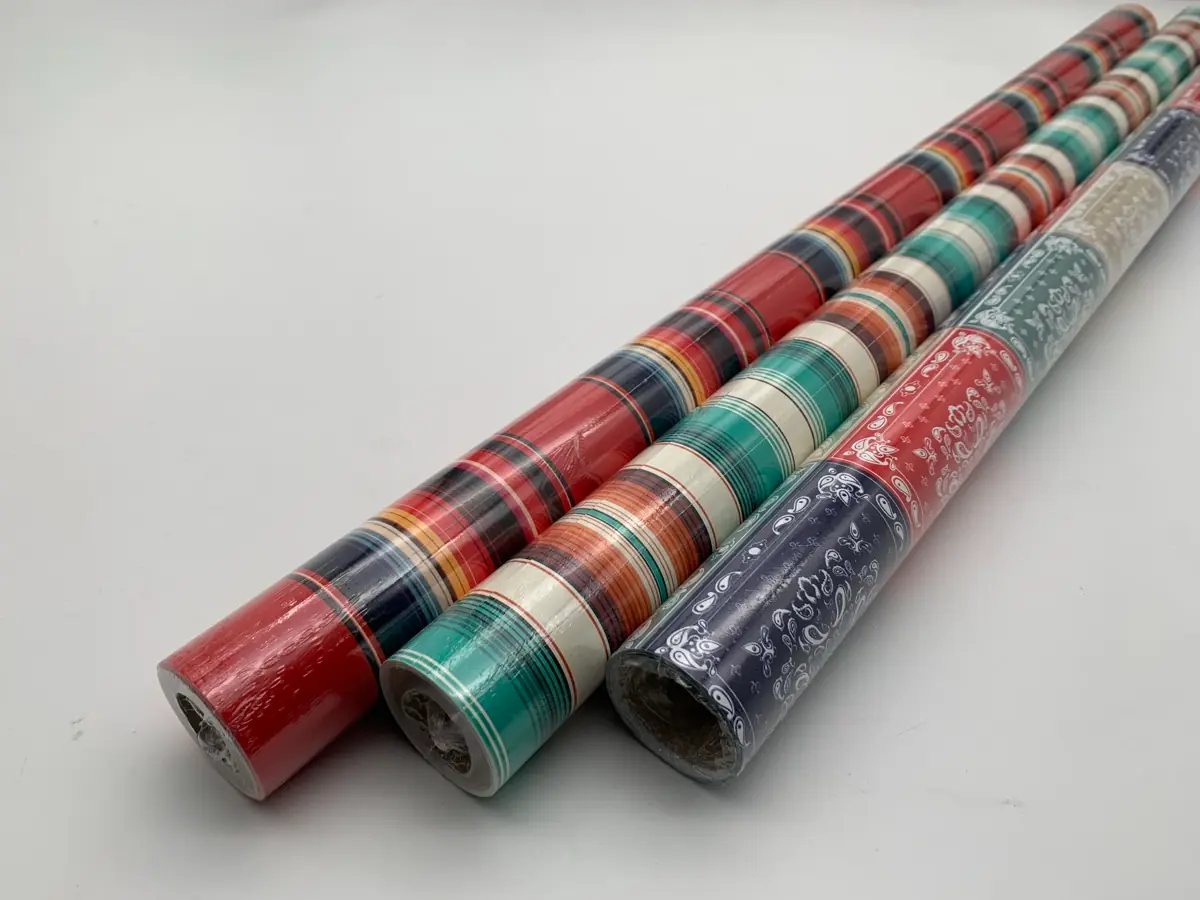
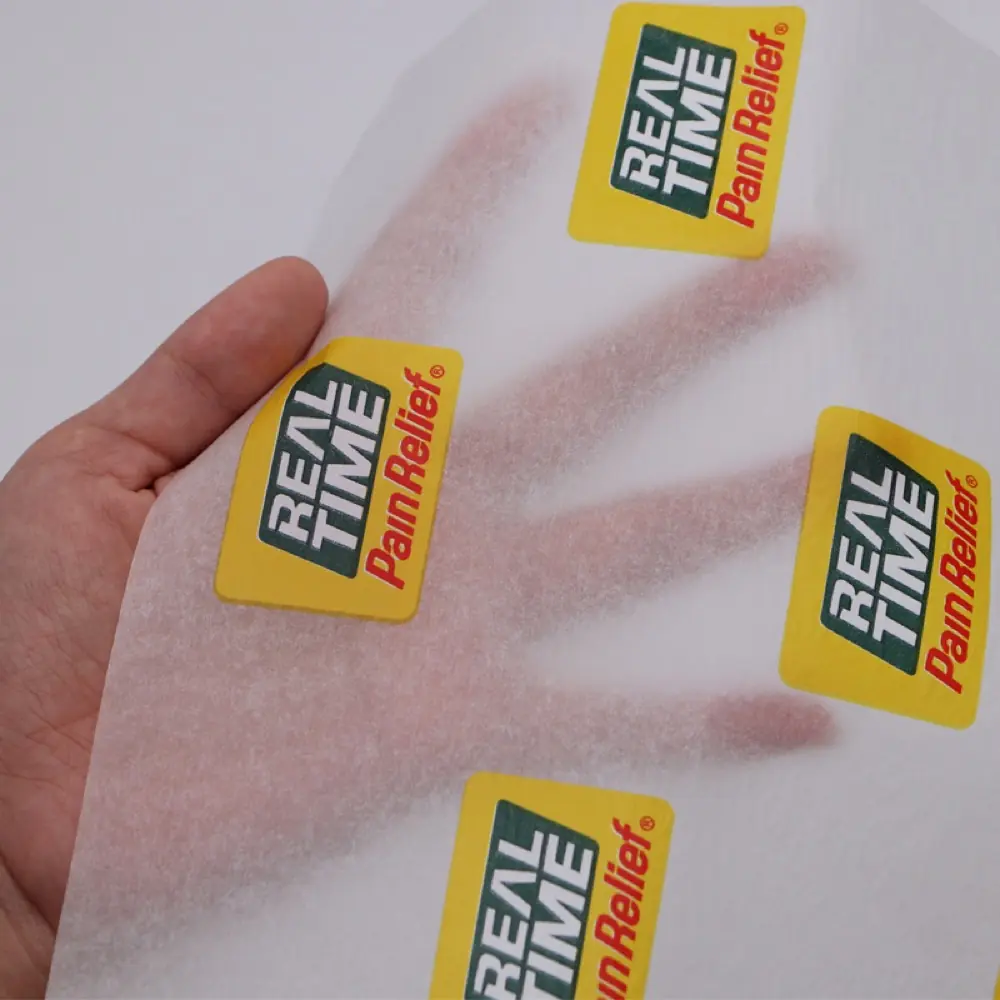
Custom printed paper is specifically designed to reflect a company's brand identity. Rather than using generic designs, businesses can incorporate company logos, brand colors, repeating patterns, seasonal artwork, promotional messages, and product collection themes. Custom printed paper transforms packaging from a functional material into a marketing asset. This approach is particularly common among luxury brands, fashion retailers, cosmetics companies, jewelry businesses, gift packaging suppliers, and e-commerce brands.
As packaging increasingly influences purchasing decisions, demand for custom paper products continues to grow — our custom printing order volume increased 40% year-over-year in 2025.
The Brand Recognition Advantage
A key difference between standard paper and custom printed paper is branding capability. Standard packaging typically does not communicate anything unique about a company — customers may remember the product but forget the packaging. Custom printed paper creates repeated visual exposure: each time customers interact with the packaging, they see logos, brand colors, design elements, and marketing messages. Over time, these repeated interactions strengthen brand recognition.
From our factory floor, we consistently observe that brands using custom packaging develop stronger visual identities than competitors relying solely on generic materials.
Customer Experience and Unboxing Impact
Consumer expectations have changed dramatically in recent years. Today, customers evaluate not only the product itself but also the presentation surrounding it. Standard packaging generally focuses on functionality, while custom printed paper focuses on both functionality and experience. Branded wrapping paper creates a premium appearance, a sense of excitement, greater perceived product value, and stronger emotional engagement.
We recently worked with a cosmetics startup that saw their Instagram unboxing mentions triple within two months of switching to custom printed tissue — user-generated content that cost them nothing in advertising spend.
Marketing Value Beyond Packaging
Many companies underestimate how often customers interact with packaging materials. Unlike advertisements that disappear after a few seconds, packaging remains physically present throughout the entire customer journey. Custom printed paper functions as passive marketing, increasing brand visibility (customers repeatedly see the brand during unboxing), encouraging social media exposure (professionally designed packaging is more likely to be shared online), supporting consistent brand presentation (uniform packaging creates a cohesive brand image), and enhancing product positioning (premium packaging increases perceived product value). From a manufacturer's viewpoint, custom packaging delivers branding opportunities that generic paper simply cannot provide.
Cost Comparison: Standard vs Custom Paper
One reason some businesses hesitate to adopt custom printing is the perceived increase in cost. While custom printed paper involves a higher initial investment, the total value should be evaluated more broadly. Standard paper offers lower upfront cost, faster availability (3-5 days from stock), and minimal design requirements. Custom printed paper offers stronger branding, better customer experience, greater differentiation, and enhanced marketing impact.
At our factory, the typical cost difference is $0.03-0.08 per sheet for custom vs. standard — which often translates to less than $0.15 per customer order for most retail applications. For companies competing in crowded markets, branding value frequently outweighs the additional production expense.
Factor
Standard Paper
Custom Printed Paper
Unit Cost
$0.02–0.06/sheet
$0.05–0.14/sheet
Setup Cost
None
$150–500 (one-time, reused on reorders)
MOQ
No minimum
500 sheets (flexo) / 3,000 sheets (gravure)
Lead Time
3–5 days
10–15 days
Branding
None
Full logo, pattern, color matching
Best For
Startups, testing, basic packaging
Established brands, retail, luxury
Production Considerations from a Factory Perspective
Custom printed paper requires additional production steps compared to standard paper. From order placement to delivery, here is the real-world timeline at our factory: artwork preparation (1-2 days, free design review included), color matching (Pantone verification via spectrophotometer, digital proof to client), printing setup (cylinder engraving for gravure, plate mounting for flexo — a one-time setup cost), bulk production (10–15 days depending on volume), and quality control (3 inspection gates with defect rate held below 0.3%). Standard paper ships within days; custom paper takes 2-4 weeks. But the minimum order quantity for custom starts at just 500 sheets for flexo — making it accessible even for small brands testing the waters.
Working with an experienced manufacturer ensures these processes run efficiently and consistently.
Real example from our production floor: A U.S. gift retailer transitioned from standard red kraft to custom-printed wrapping paper with their snowflake pattern. Their reorder rate among holiday customers increased 22% in Q4 compared to the previous year with generic paper. The cost difference was $0.05 per sheet.
Sustainability Considerations
Environmental responsibility plays an increasingly important role in purchasing decisions. Many buyers assume custom printing reduces sustainability, but this is not necessarily true. At Wise Packaging, custom printed paper is produced using recyclable paper, FSC-certified materials, water-based inks, and environmentally responsible production methods — the same sustainable base materials used in our standard paper lines. The key difference is the printing process, and we've invested in closed-loop ink recovery systems that reduce waste by over 40% compared to conventional printing.
Businesses can often achieve both branding objectives and environmental goals simultaneously.
The EPA's Sustainable Materials Management program identifies paper as one of the most widely recycled materials in municipal waste — and FSC-certified custom printing supports this circular economy model without sacrificing brand quality.
Which Industries Benefit Most from Custom Printed Paper?
While virtually any business can benefit from branded packaging, certain industries gain particular advantages. Fashion and apparel brands leverage packaging as part of the customer experience. Cosmetics and beauty companies rely on brand presentation to influence product perception. Luxury goods use premium packaging to support premium positioning.
Jewelry packaging often reflects the value of the product itself. Corporate gifting uses custom paper to strengthen brand visibility and professionalism. E-commerce brands compensate for the absence of physical retail experiences through branded packaging. We serve clients across all these sectors from our Dongguan facility.
Why Many Growing Brands Eventually Switch to Custom Packaging
As businesses expand, differentiation becomes increasingly important. Generic packaging may meet functional requirements, but it rarely contributes to long-term brand development. Custom printed paper allows companies to strengthen brand identity, improve customer loyalty, create premium experiences, and enhance product presentation. We've observed a clear pattern: brands typically start with standard paper during their launch phase, then switch to custom printing once they reach 500-1,000 orders per month — the point at which branding ROI becomes clearly measurable.
Why Work with an Experienced Packaging Paper Manufacturer
Choosing the right manufacturing partner is just as important as selecting the right packaging material. Professional manufacturers provide design support, material recommendations, printing expertise, quality assurance, and scalable production capacity. Wise Packaging works with global retailers, distributors, and brand owners to develop custom wrapping paper, tissue paper, and packaging paper solutions tailored to specific branding goals. By working directly with an experienced manufacturer from our 50,000 m² Dongguan facility, businesses gain greater control over both packaging quality and brand presentation — with the added benefit of factory-direct pricing.
What Drives the Cost Gap Between Custom-Printed and Stock Paper
Custom printing adds cost over stock paper, but the gap is driven by a small set of predictable factors rather than a flat percentage.
The break-even versus stock depends entirely on your volume and colour count — there is no single number that applies. Share your specs and we'll model the per-unit difference.
Plate and setup (make-ready): the fixed cost of cylinders/plates and press setup is amortized over the run — it dominates at low volumes and shrinks per-unit as volume grows.
Colour count and print method: more colours, special inks, or multi-station flexo/gravure raise cost versus single-colour or digital.
Finishing: coating, embossing, or die-cutting add steps beyond the base sheet.
Order volume and repeat frequency: consolidating repeats into one PO smooths setup across runs.
Frequently Asked Questions
Is custom printed paper more expensive than standard paper?
Yes, custom paper costs $0.03-0.08 more per sheet. But the branding and marketing value typically outweighs the cost for established brands.
What is the minimum order for custom wrapping paper?
Flexo printing starts at 500 sheets. Gravure printing starts at 3,000 sheets. Standard paper has no minimum.
How much longer does custom paper take to produce?
Custom paper takes 2-4 weeks vs 3-5 days for standard. The extra time covers artwork review, plate engraving, and color matching.
Can I start with standard paper and switch to custom later?
Yes. Many brands start with standard during launch and switch to custom once they reach 500-1,000 orders per month.
What should I prepare before ordering custom paper?
Your logo/artwork file (AI, PDF, or PSD), preferred color references (Pantone best), and estimated annual volume.
Want custom-printed paper?
Share your artwork, size, and volume — we’ll handle printing, finishing, and delivery.
Sales Manager at WiseInco · 15+ years in packaging paper industry
Helping global brands source FSC-certified gift wrapping, tissue, kraft, and greaseproof paper from our 50,000 m² factory in Dongguan, China. 5,000+ containers exported to 30+ countries annually.