Gift Wrapping Paper Manufacturer: How to Choose the Right Production Partner for Long-Term Business Success
As competition in retail, e-commerce, luxury packaging, and corporate gifting continues to increase, businesses are paying closer attention to packaging quality than ever before. Gift wrapping paper is no longer viewed as a simple decorative material. It has become an important branding asset that influences customer perceptions, enhances product presentation, and contributes to overall customer experience. For importers, distributors, retailers, and brand owners, selecting the right gift wrapping paper manufacturer is a strategic decision that can impact product quality, supply chain reliability, and long-term business growth. While many suppliers may appear similar on the surface, significant differences often exist in manufacturing capabilities, quality control systems, customization options, and production expertise. From a factory perspective, understanding how gift wrapping paper is produced — and how manufacturers operate — can help buyers make more informed sourcing decisions. This guide explores the key factors businesses should evaluate when selecting a gift wrapping paper manufacturer and explains what separates professional manufacturing partners from ordinary suppliers.
TL;DR
Manufacturing capability, not the product list, is what separates gift wrapping paper suppliers. Verify who owns the printing and converting lines, how colour is controlled between runs, and whether quality control is documented rather than described. Trading companies can be a good fit for small mixed orders, while long-run brand programmes usually benefit from working factory-direct.
Why the Manufacturer Matters More Than the Product
Many buyers focus primarily on paper specifications such as paper weight (GSM), printing quality, colors, and surface finishes. While these factors are important, the manufacturer behind the product often has a greater impact on the final result. A qualified manufacturer influences product consistency, order accuracy, lead times, printing quality, cost efficiency, and packaging innovation. When production issues occur, an experienced manufacturing partner can often solve problems before they affect customers.
This is one reason why many successful brands prioritize long-term supplier relationships rather than treating packaging as a commodity purchase.
Understanding the Difference Between a Manufacturer and a Trading Company
Many buyers are surprised to discover that not all suppliers are actual manufacturers. Trading companies typically source products from multiple factories and resell them to customers. They offer broader product ranges and simplified sourcing, but come with potential limitations including less production visibility, limited technical control, and additional markups. A factory directly controls production processes, offering better quality management, faster technical communication, more customization flexibility, and direct factory pricing.
For custom gift wrapping paper projects, working directly with a manufacturer often provides greater control over the final product.
Key Manufacturing Capabilities to Evaluate
Printing quality directly affects brand perception. Professional manufacturers generally work with gravure printing, flexographic printing, and digital printing for proofs and short promotional runs. Each process offers different advantages depending on project requirements. Buyers should ask manufacturers which printing method is recommended, what print resolution can be achieved, and whether colors can be matched accurately.
Strong printing capability is often one of the clearest indicators of manufacturing quality.
Different products require different paper materials. A capable gift wrap manufacturer should offer multiple options. Coated paper is suitable for vibrant graphics and premium branding. Kraft paper is popular for sustainable packaging initiatives.
Specialty paper is often used for luxury and high-end packaging applications. A flexible manufacturer should be able to recommend appropriate materials based on project objectives and budget considerations.
Customization Capabilities Are Becoming Essential
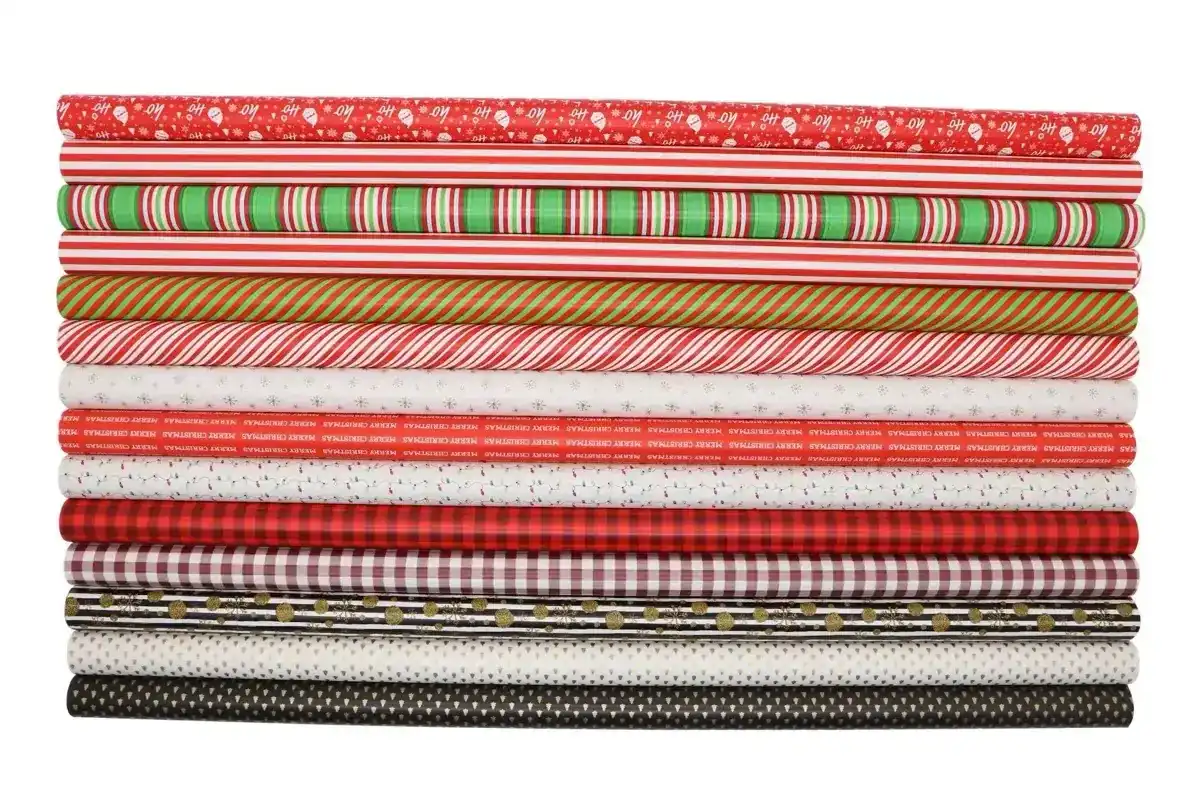
Today's packaging market is driven by branding. Generic wrapping paper may fulfill functional requirements, but customized solutions create stronger customer engagement. Modern manufacturers should support custom logos, pattern development, brand color matching, seasonal collections, and special promotional campaigns. Many global brands increasingly view gift wrapping paper as part of their marketing strategy rather than simply a packaging material.
This trend continues to drive demand for customized production.
Quality Control: The Most Overlooked Supplier Evaluation Factor
One of the biggest differences between average suppliers and professional manufacturers is quality control. Quality issues can cause color inconsistencies, printing defects, material variations, and customer complaints. Strong manufacturers typically implement inspections throughout production. Key control points include raw material inspection (verifying paper quality before production begins), in-process monitoring (checking print consistency during manufacturing), and final product inspection (ensuring products meet customer requirements before shipment).
Consistent quality is especially important for brands that rely on packaging to maintain a premium image.
Sustainability Is Reshaping Manufacturing Decisions
The packaging industry has changed significantly over the past decade. More buyers are requesting environmentally responsible packaging solutions. Leading manufacturers now offer recyclable wrapping paper, FSC-certified paper, eco-friendly inks, and plastic-free packaging options. Sustainability is no longer limited to luxury brands.
It has become a requirement across multiple market segments, including retail, e-commerce, cosmetics, and corporate gifting. Businesses evaluating manufacturers should consider both packaging quality and environmental responsibility.
Certification is verifiable rather than rhetorical: an FSC chain-of-custody certificate carries a registration number - ours is ESTS-COC-200766 - and any buyer can confirm its scope and expiry on the FSC public database before placing an order.
Production Capacity and Scalability
A supplier may perform well during small production runs but struggle when order volumes increase. Scalability should be evaluated before establishing long-term relationships. Important questions include: What is the monthly production capacity? How are peak-season orders managed?
Can production be expanded quickly? For businesses planning growth, production scalability can be just as important as price.
International Export Experience
Businesses serving global markets should prioritize manufacturers with export experience. Experienced export manufacturers typically understand international quality requirements, documentation processes, shipping logistics, and packaging compliance expectations. This expertise helps reduce delays and improve overall supply chain efficiency. For overseas buyers, export capability is often an important factor in supplier selection.
What Packaging Buyers Should Ask Before Selecting a Manufacturer
When evaluating potential suppliers, buyers should consider asking: regarding manufacturing — are you a factory or a trading company? What printing technologies do you use? What materials do you recommend? Regarding quality — how is quality controlled?
Can samples be provided? How are color standards maintained? Regarding customization — what branding options are available? What are the minimum order quantities?
Can exclusive designs be produced? Regarding sustainability — do you offer recyclable materials? Are FSC-certified options available? The answers often reveal whether a supplier is suited for long-term cooperation.
We've had visitors from 30+ countries tour our Dongguan facility. One thing that consistently surprises them: our QC lab runs tensile strength tests, color spectrophotometry, and GSM verification on every batch — not just random sampling. This is why our defect rate stays under 0.3%.
Why More Global Brands Prefer Direct Factory Partnerships
As competition continues to increase, brands are looking for packaging partners rather than simply product suppliers. A manufacturing partner can provide technical expertise, product innovation, consistent quality, and supply chain stability. Companies such as Wise Packaging work closely with retailers, distributors, brand owners, and importers to develop custom wrapping paper solutions tailored to specific branding and packaging requirements. Using a combination of supplier expertise, manufacturing experience, and customization capabilities, businesses can build packaging programs that support both branding and commercial objectives.
Future Trends in Gift Wrapping Paper Manufacturing
Several trends are expected to shape the industry in the coming years. Demand for recyclable and eco-friendly papers continues to grow. Brands increasingly require unique packaging solutions. Packaging quality continues to influence customer purchasing behavior.
Supply chain efficiency is becoming an important competitive advantage. Manufacturers that adapt to these trends will be better positioned to support evolving customer needs.
Choosing a Manufacturing Partner, Not a Catalogue
Selecting a gift wrap manufacturer involves much more than comparing prices. Businesses should evaluate manufacturing expertise, printing technology, quality control, customization capabilities, sustainability initiatives, and export experience. The right manufacturing partner can improve packaging quality, strengthen branding, and support long-term business growth. For businesses seeking custom gift wrapping paper, tissue paper, packaging paper, and sustainable paper packaging solutions, contact Wise Packaging.
Frequently Asked Questions
What does a gift wrapping paper manufacturer do?
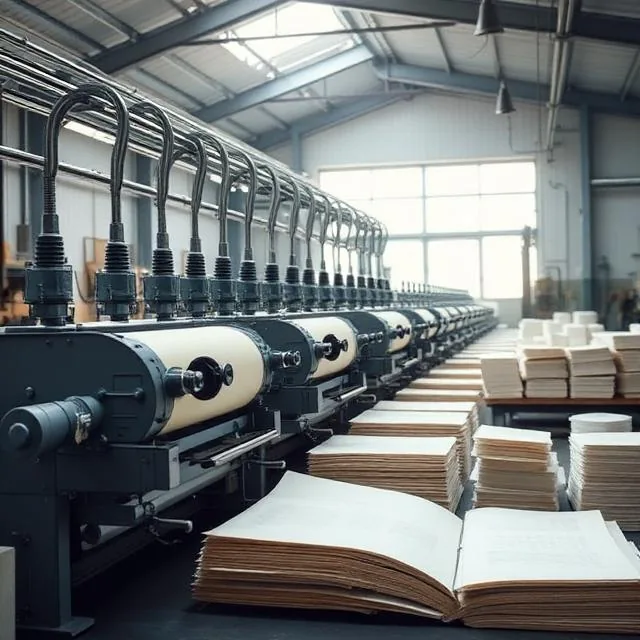
It converts base paper into finished roll or sheet product: buying or receiving FSC-certified stock, printing one to six colors by flexo or gravure, then embossing, foiling, sheeting, rewinding and packing to the buyer's format. What separates factories is control over grammage consistency, color registration and trimming, not the length of the pattern catalogue.
Should I source directly from a wrapping paper factory?
If your specification is custom, usually yes. A factory can adjust grammage, sheet size, core diameter and print layout inside its own process, while a trading company has to relay each change to a third party. Ask for the business licence, the FSC certificate number and a walk-through of the press line before you treat a supplier as a factory.
What printing methods are used for gift wrapping paper?
Flexographic for most short and medium runs, gravure where a very long run justifies cylinder cost and needs deep, even laydown, and digital for proofs or small promotional batches. Each color needs its own plate or cylinder station, so a six-color design carries six setup positions - which is why color count drives both tooling and minimum quantity.
What is the MOQ for custom gift wrapping paper?
Our flexo minimum is 500 reams per design, because each color needs a plate and the press has to be washed and re-registered between jobs. Below that volume the setup carries the run rather than the paper. Tissue paper starts at one tonne for the same reason, and unprinted or stock-pattern orders can often be smaller.
How long does production take after artwork approval?
Sampling runs five to seven working days, including plate making and courier transit. Bulk production after you approve the proof takes ten to fifteen working days for a standard flexo job, and longer if foiling, embossing or hand-assembly is involved. Sea freight is additional and depends entirely on the destination port.
How do I choose a reliable manufacturer?
Verify before you negotiate. Ask for the FSC chain-of-custody certificate number and check it on the FSC database, the business licence and factory area, the number and width of presses, and how incoming paper is tested. Then order a paid sample. A supplier that answers these quickly and precisely is usually also the one that answers production problems quickly.
Need custom gift wrapping paper?
Compare finishes, weights, and printing options across our full gift wrap range.
Sales Manager at WiseInco · 15+ years in packaging paper industry
Helping global brands source FSC-certified gift wrapping, tissue, kraft, and greaseproof paper from our 50,000 m² factory in Dongguan, China. 5,000+ containers exported to 30+ countries annually.
How to select the best gift wrapping paper for your business. Compare coated, kraft, textured & metallic paper. Tips for branding, printing, and supplier.