Asking a supplier for a price and issuing a formal RFQ serve different purposes. A basic quotation request provides enough information for a supplier to estimate a project. An RFQ, or Request for Quotation, creates a structured purchasing document that allows multiple suppliers to respond to the same requirements. For packaging paper buyers, that distinction becomes important when comparing suppliers.
TL;DR
Asking a supplier for a price and issuing a formal RFQ serve different purposes. A basic quotation request provides enough information for a supplier to estimate a project.
Prepare the Project Information First
An RFQ should not be used to discover the basic requirements of the project.
Before preparing the document, buyers should already have a reasonable understanding of the product, dimensions, quantity, printing requirements, and intended application.
That guide addresses the information-gathering stage. This RFQ guide starts at the next step: turning those requirements into a standardized document that suppliers can complete and return.
Give Every RFQ a Clear Identity
Start the document with a short project-control section. Include fields such as: RFQ reference number, project or SKU name, RFQ revision, issue date, response deadline, buyer contact, and supplier name.
Revision identification is particularly useful when specifications or artwork change during sourcing. For example, if RFQ-024 Rev. B contains an updated roll width, suppliers should clearly indicate that their quotation is based on Rev. B. This prevents an older quotation from being compared accidentally against a newer specification.
Separate Requirements and Responses
A strong RFQ should make a visible distinction between what the buyer requests and what the supplier proposes. A practical structure could look like this:
The objective is not to force every supplier to propose an identical solution. Instead, the structure makes differences visible. A supplier may have a reasonable alternative. Buyers simply need to know that an alternative is being quoted.
Requested paper grade
Offered paper grade
Target GSM
Offered GSM
Finished format
Confirmed format
Order quantity
Quoted quantity
Print specification
Proposed process
Packing requirement
Offered packing
Required documentation
Available documents
Delivery basis
Offered Incoterm
Required date
Proposed lead time
Reference a Controlled Specification
The RFQ does not need to contain every technical explanation. A better approach for detailed projects is to attach or reference a controlled specification.
For example: Specification WP-2026-014 Rev. 02. The specification may define the approved material, grammage, dimensions, print requirements, converting format, packing, and other technical criteria.
This separation has another advantage: the RFQ can remain a commercial purchasing document while the specification remains the technical reference. Where paper weight has not yet been finalized, buyers can separately review the Paper GSM: Complete Buyer's Guide before locking the RFQ specification.
Control Artwork by Revision
Custom printed paper creates another source of quotation ambiguity: artwork versions. Avoid attaching files called logo-final.ai, logo-final-new.ai, or logo-final-new2.ai.
Instead, assign a controlled filename or revision: WP-Floral-Pattern-R03.ai. The RFQ can then state: Artwork reference WP-Floral-Pattern-R03.ai.
If the print design changes, update the artwork reference and determine whether affected suppliers need to revise their quotations. This helps distinguish a genuine price difference from a quotation based on outdated artwork.
Standardize the Commercial Response
This is one of the most important sections of the RFQ. Ask each supplier to respond using the same commercial fields: quoted quantity, pricing unit, unit price, MOQ, tooling or setup charges, sample charges where applicable, quotation validity, payment terms, production lead time, and Incoterm.
The pricing unit deserves particular attention. A price per sheet cannot be compared directly with a price per roll, ream, kilogram, or other unit without conversion. The RFQ should therefore state the requested pricing basis or require suppliers to identify theirs clearly.
Sometimes buyers want to evaluate more than one commercial scenario. Instead of issuing several separate RFQs, use quantity breaks or options where appropriate.
For example: Option A 20,000 sheets, Option B 50,000 sheets, Option C 100,000 sheets. Alternatively, the RFQ could compare printed versus unprinted, roll versus sheet, or standard versus alternative material.
Keep optional scenarios clearly separated so suppliers do not combine different specifications into one ambiguous quotation.
Require an Exceptions Statement
Every formal RFQ should provide somewhere for suppliers to disclose deviations. A simple instruction can work: Please identify any deviation from the requested material, specification, printing, packing, documentation, quantity, or commercial terms.
A blank exception field can also be included. This is valuable because a lower quotation may sometimes be based on a different proposed specification rather than a lower price for an identical product. Exceptions do not automatically make a quotation unsuitable. They make the supplier's proposal transparent enough to evaluate.
Connect the RFQ to the Actual Product
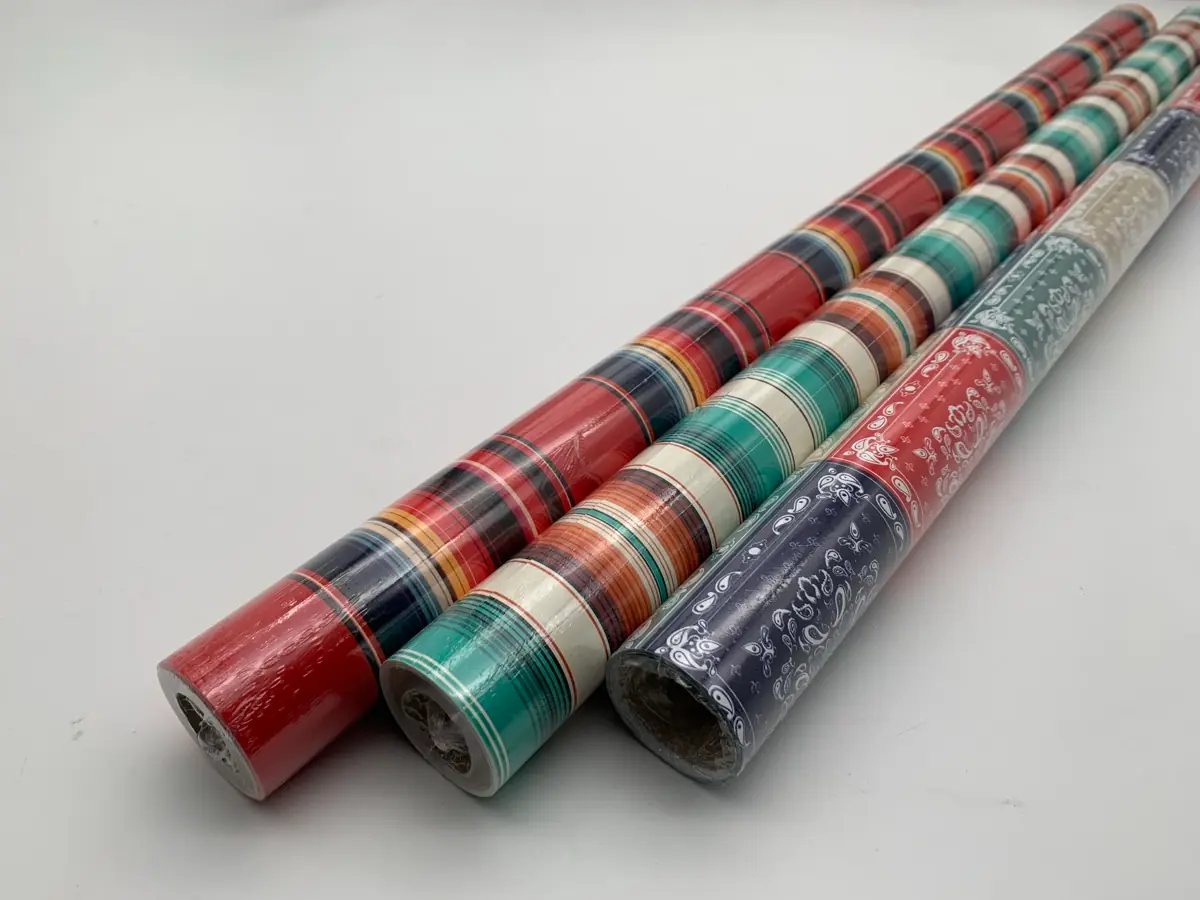
For gift wrapping paper, buyers may need to address print design, finishing, roll or sheet format, and wrapping application. Our gift wrapping range includes rolls, sheets and reams with multiple printing and finishing options.
For custom tissue paper, the RFQ may require different grammage, format, print, color, or application details. The tissue range includes sheet, roll and ream formats with custom printing.
Projects involving white kraft paper may require another set of material, printing and converting requirements, and we supply roll, sheet and custom-cut formats.
For grease proof paper, the RFQ should capture food-contact compliance, basis weight, coating or release treatment, and any migration-test documentation, since these are specified differently from non-food grades.
The RFQ structure can remain consistent while the technical specification changes by product.
Define Sampling Without Duplicating Quality Control
An RFQ can state whether sampling is required, but it should not become a full inspection document. Useful fields include: sample required yes or no, sample type, sample charge, sample lead time, and approval required before production yes or no.
Detailed approval criteria belong in the sample-approval process. Final production conformity belongs in quality inspection. Keeping these stages separate gives each procurement document a clear purpose.
A Practical RFQ Framework
Before sending the RFQ, check whether the document contains these seven sections. This structure works as a reusable RFQ template for packaging paper: copy the sections, fill the buyer-requirement side, and ask each supplier to complete the response side.
Document Control — RFQ number, revision, dates, buyer and supplier.
Specification Reference — Product requirements and controlled technical specification.
Artwork Reference — Named artwork file and correct revision.
Quantity Options — Required quantity and any alternative volume tiers.
Commercial Response — Price, MOQ, tooling, payment, validity, lead time and delivery terms.
Sampling and Documents — Required samples and specified supporting documentation.
Exceptions — A mandatory place for suppliers to disclose differences from the requested basis.
Before You Issue the RFQ
At Wise Packaging, custom paper projects are easier to evaluate when technical requirements and commercial responses are kept clearly separated. The objective is not to make an RFQ unnecessarily complicated. It is to remove assumptions that could affect quotation comparison later.
A useful final test is simple: Could another procurement team member compare the returned quotations without having to reconstruct every supplier conversation? If the answer is yes, the RFQ is doing its job.
Frequently Asked Questions
Should every packaging paper supplier receive the same RFQ?
For a competitive quotation process, using the same baseline specification and commercial response fields makes supplier differences easier to identify.
What is the difference between an RFQ and a specification sheet?
The RFQ requests a commercial response, while the specification sheet defines the technical requirements of the product. The RFQ can reference the specification rather than duplicate it.
Should alternative materials be allowed in an RFQ?
They can be, provided suppliers identify alternatives clearly. Buyers can add an exceptions field to prevent substitutions from being mistaken for full specification compliance.
Should tooling charges be separated from the unit price?
Requesting tooling or setup charges as separate commercial fields can make different cost structures easier to compare.
How should artwork revisions be identified?
Use a controlled filename or revision reference in the RFQ so buyers and suppliers can identify which artwork version the quotation covers.
What happens after suppliers return the RFQ?
The next procurement stage is to normalize the responses and compare technical compliance, exceptions, commercial terms, sampling requirements, and price on a consistent basis.
Exploring certified or sustainable paper?
Understand what each certification actually covers before you specify it — our FSC guide breaks it down.
Sales Manager at WiseInco · 15+ years in packaging paper industry
Helping global brands source FSC-certified gift wrapping, tissue, kraft, and greaseproof paper from our 50,000 m² factory in Dongguan, China. 5,000+ containers exported to 30+ countries annually.