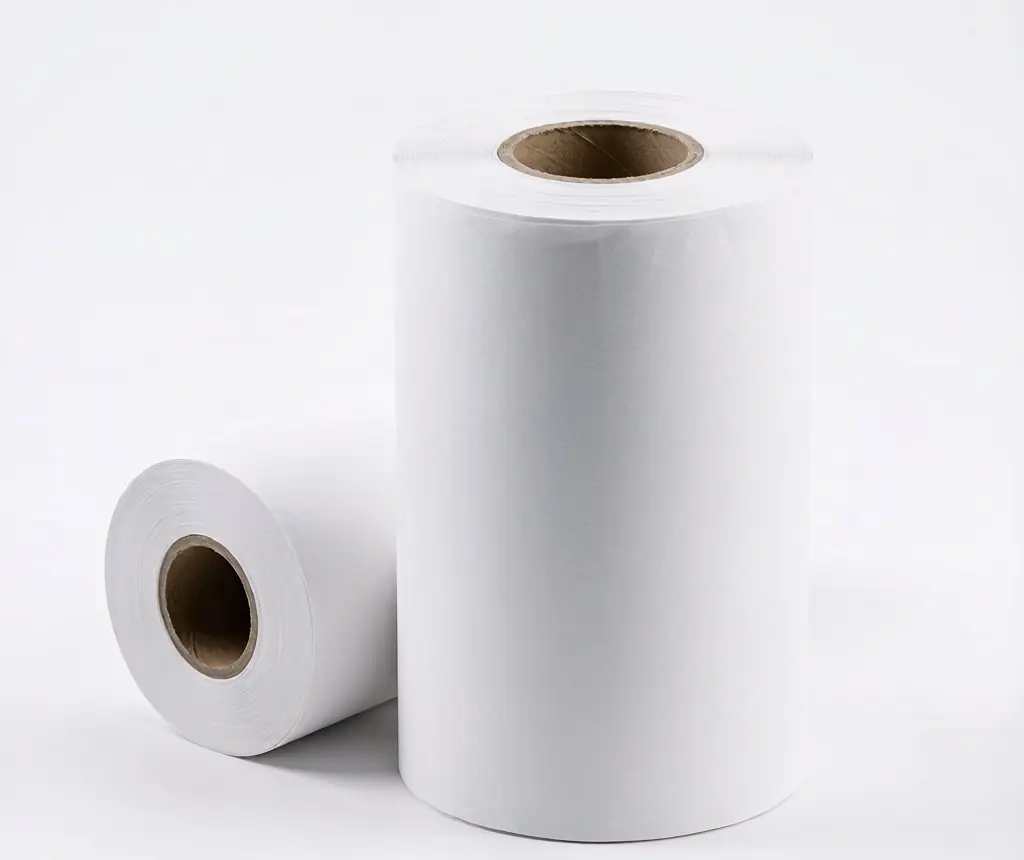
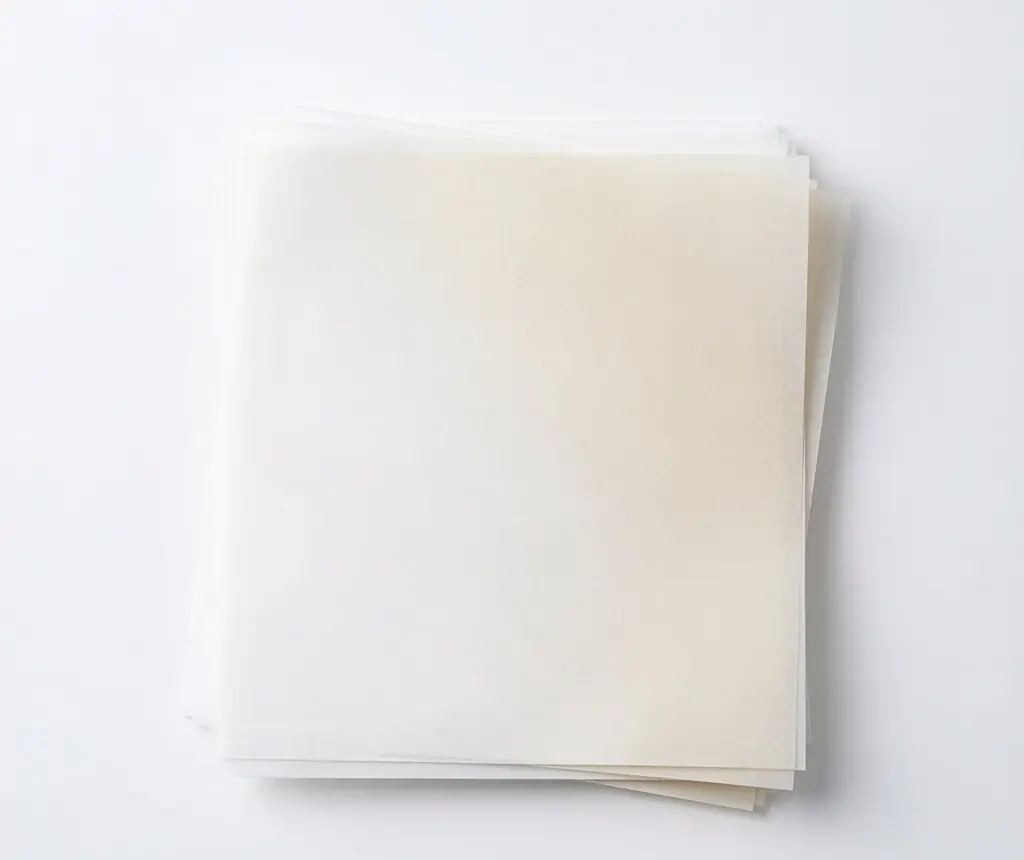
Greaseproof Paper Manufacturers in China: How Buyers Shortlist Suppliers
Searching for a grease proof paper manufacturer in China returns thousands of results, and most of them look the same: a factory photo, a row of certificate logos, and a promise of competitive pricing. The hard part for buyers is not finding suppliers — it is telling them apart before money changes hands. This guide explains the supplier types you will actually encounter, the compliance evidence that separates manufacturers from resellers, and the verification steps worth building into every shortlisting process.
TL;DR
Not every “manufacturer” exports its own production: trading companies, converters and integrated mills describe themselves in similar language but differ sharply in production control, certification chain and lead time. Food-contact documentation (EU 10/2011, FDA 21 CFR 176, GB 4806) and a verifiable FSC Chain of Custody number remove most of the risk. As a working benchmark, custom print MOQs commonly start around 500 reams, with bulk production running 10–15 days after proof approval.
Why China Supplies a Large Share of Global Greaseproof Paper
China is the world's largest producer of paper and paperboard, and greaseproof paper sits inside a mature export ecosystem: base paper mills, coating and calendering lines, food-safe printers, slitting equipment and freight forwarders are frequently located within the same industrial region.
Greaseproof paper is not simply thin paper. It is densified during manufacture — the fibre network is beaten and calendered until oil cannot easily pass through — so producing it consistently requires dedicated equipment rather than a generic paper line. That specialisation is why capacity is concentrated in a relatively small number of regions, chiefly Guangdong, Zhejiang and Shandong.
Capacity, however, is not the same as consistency. The real differences between suppliers show up in three less visible places: how stable the base paper supply is, how tightly coating weight is controlled, and whether compliance documents are issued directly or passed along second-hand.
Base paper consistency — grammage and formation variation between batches
Coating control — even silicone or PE weight, or none at all if the grade is uncoated
Documentation — declarations and test reports issued by the producer, not forwarded from elsewhere
Three Types of Supplier — and Why the Difference Matters
Almost every company you contact will describe itself as a manufacturer. In practice they fall into three groups, and the group determines how much of your order they actually control.
Trading companies are not inherently a bad choice. For a buyer testing a market with a small trial order, their flexibility is genuine value, and the risk only becomes material at scale — once an order is large enough that lead time and batch consistency start to matter.
The practical test is simple: ask which company physically performs each step your product requires, and ask for the certification number tied to the producing site rather than to the trading entity. The table below sets out how the three groups compare.
Supplier type
Production control
Certification chain
Best for
Main risk
Trading company / agent
None — subcontracts to third-party mills
Often cannot trace to a specific machine
Very small trial orders; sourcing several products at once
Lead time and quality shift with whoever they place the order with
Converter / coater
Partial — owns coating, slitting or printing
Depends on the base paper supplier’s certification
Buyers needing a specific coating or print process
Base paper origin and CoC claims can be hard to verify
Integrated mill
Full — base paper, coating, printing and converting in-house
Traceable through the whole chain
Repeat orders needing stable quality and audit-ready documents
Less suited to micro-orders
Food-Contact Compliance: Ask for Evidence, Not Claims
For any paper that touches food, compliance is the first filter — not a detail to confirm after the price looks right. Depending on your market, the relevant frameworks are EU 10/2011 for food-contact materials (including coated paper), FDA 21 CFR 176 for paper and paperboard components in the United States, and the GB 4806 series in China.
A supplier's declaration of compliance should name the specific grade and, where applicable, the coating chemistry. A generic certificate describing “food-grade paper” is not evidence for a particular product.
The coating choice drives both performance and end-of-life claims. PE-coated grades give a strong moisture and grease barrier but are not compostable or widely recyclable. Silicone-coated grades handle heat and release well, which suits baking liners. Uncoated densified grades rely on the fibre structure alone: they resist oil adequately for wrapping and are generally industrially compostable, but their barrier ceiling is lower than coated paper.
A compostability claim attached to a PE-coated product is a documentation failure that will surface in a brand audit. Ask what the coating actually is before accepting the claim.
How to Verify a Manufacturer Before You Commit
Verification is a short, structured process. Done once properly, it costs a fraction of discovering a problem after a container has shipped — and none of it requires flying to the factory. A supplier who answers all six points below quickly is demonstrating that the underlying records actually exist.
Verify the FSC Chain of Custody number yourself — look up the licence code in the FSC public database and confirm the certificate is active, covers your product category, and names the site where production will happen
Check ISO 9000 certification through the issuing body rather than the supplier's PDF; confirm scope and expiry date
Request food-contact or migration test reports from an accredited third-party laboratory, and check the reported grade matches the grade you are buying
Ask for a live video walkthrough of the coating line, slitting equipment and QC station — not a marketing reel
Order pre-production samples and evaluate them on your own conversion process, not just visually
Ask for two or three current export references in your region and confirm shipment records
What to Put in Your RFQ
Vague enquiries attract vague quotes, and vague quotes cannot be compared. Include the following and the responses you receive will be genuinely comparable. If you are sourcing packaging paper more broadly, our guide to sourcing from China covers the import and inspection side in more detail.
Application — direct food contact, indirect contact, or liner and interleaving use
Grammage — target gsm, plus any tolerance your process allows
Format — rolls, sheets or pre-cut wraps, with width and diameter
Coating preference — uncoated, silicone or PE
Print — number of colours, artwork status, and whether food-safe inks are required
Estimated annual volume — this is what determines price tiers and how MOQ is treated
Destination market — this determines which compliance framework applies
MOQ, Lead Time and Sampling: Realistic Benchmarks
MOQ in greaseproof paper is driven by print setup and conversion efficiency rather than by the paper itself. Custom printed orders commonly start around 500 reams because plates and press time have to be amortised across the run; unprinted or stock grades can usually be supplied in smaller quantities, sometimes priced by weight.
Typical bulk production runs 10–15 days after artwork and proof approval, with sampling adding roughly 5–7 days before that. Ocean freight then adds transit time by destination — 20–30 days to Europe and North America is a realistic benchmark, with air freight available for urgent orders at a significant premium.
As one reference point, WiseInco is an integrated mill in Dongguan where custom print MOQs start at 500 reams, tissue and greaseproof lines start at 1 ton, sampling takes 5–7 days and bulk production runs 10–15 days after proof approval. Treat that as a single data point rather than a target.
If print method is what is driving your minimum, this MOQ guide explains how the setup economics work.
Five Mistakes That Cost Buyers Money
Most shortlisting failures are avoidable and repeat across categories. For how packaging documentation requirements are tightening across Europe, see our PPWR buyer's guide.
Treating greaseproof paper, wax paper and parchment as interchangeable — they behave differently under heat and are not regulated the same way
Accepting a compostability claim without checking the coating chemistry
Using the FSC mark when Chain of Custody does not cover the full chain, which puts the brand's own claim at risk
Comparing unit price alone while ignoring roll width and diameter that do not match your converting equipment
Skipping pre-production sampling to save a week, then discovering a print or barrier problem mid-run
Where WiseInco Fits
We are a manufacturer, so this section states our position rather than pretending to be neutral. WiseInco is the export brand of Dongguan Wise Packaging Co., Ltd., an integrated paper manufacturer operating since 2009 with a 50,000 m² facility in Dongguan, Guangdong, exporting to more than 30 countries.
For greaseproof paper specifically, we produce uncoated densified grades that are industrially compostable, alongside silicone-coated and PE-coated options where a higher barrier is required. We hold FSC Chain of Custody certificate ESTS-COC-200766 and ISO 9000, both verifiable through the issuing bodies. Our certifications page lists the documentation we can supply.
We are not the right supplier for every order. If you need a few hundred kilos to test a market, a trading company will usually serve you better. If you need stable barrier performance, audit-ready documentation and a traceable chain from base paper to finished roll at volume, that is where an integrated mill earns its place.
Whichever route you choose, the checklist above applies. Send us your specification if you would like it compared against what we can produce.
Key Terms Buyers Should Know
Greaseproof paper
Paper densified during manufacture so the fibre network resists oil and grease penetration, typically without any coating.
Wax paper
Paper carrying a paraffin or wax blend coating. Resists moisture and some grease, but is not generally suited to direct high-fat food contact or oven use.
Parchment / baking paper
Paper treated with sulphuric acid or silicone-coated to withstand oven temperatures. A different product from greaseproof paper, despite frequent confusion.
PE coating
A polyethylene layer providing a strong moisture and grease barrier. Effective, but not compostable or widely recyclable.
Silicone coating
A release coating with good heat resistance, commonly used for baking liners and wrapping sticky foods.
Declaration of Compliance (DoC)
The document in which a supplier declares a specific product's conformity with the applicable food-contact framework.
Chain of Custody (CoC)
FSC certification that tracks certified material through every processing step to the finished product.
GSM
Grams per square metre, the standard measure of paper weight. Greaseproof grades typically sit roughly in the 30–50 gsm range, with coated variants running higher.
Frequently Asked Questions
Who are the main greaseproof paper manufacturers in China?
Production is concentrated in Guangdong, Zhejiang and Shandong, where base paper mills and coating lines sit close together. Suppliers fall into three groups: trading companies that subcontract production, converters that own coating or printing but buy base paper, and integrated mills that control the full chain. The right choice depends on whether you need flexibility for a small trial order or traceable documentation at volume.
What is the MOQ for custom printed greaseproof paper?
Custom print minimums are driven mainly by plate and press setup, and commonly start around 500 reams. Unprinted or stock grades can often be supplied in smaller quantities, sometimes priced by weight. If a supplier quotes no minimum at all for printed paper, ask how the setup cost is being recovered.
Is greaseproof paper the same as wax paper?
No. Greaseproof paper is densified during manufacture so the fibre structure itself resists oil. Wax paper carries a paraffin coating, which changes how it behaves with heat and with fatty foods. The two are regulated and used differently, and treating them as interchangeable is a common and costly mistake.
Which greaseproof paper is compostable?
Uncoated densified greaseproof paper is generally industrially compostable, while silicone-coated grades depend on the specific coating formulation. PE-coated grades are not compostable. Because the coating determines the answer, ask for the coating chemistry in writing rather than accepting a general compostability claim.
How do I verify an FSC Chain of Custody claim from a Chinese supplier?
Ask for the licence code and look it up in the FSC public certificate database. Confirm three things: the certificate is currently active, the product category covers your item, and the listed site is where your order will actually be produced.
How long does greaseproof paper production take?
Sampling typically takes around 5–7 days. Bulk production commonly runs 10–15 days after artwork and proof approval, followed by ocean transit of roughly 20–30 days to Europe or North America, or considerably less by air at higher cost. Timelines quoted well below 10 days are worth questioning, because the physical steps do not compress indefinitely.
What certifications should I ask a greaseproof paper supplier for?
At minimum: FSC Chain of Custody if a forest-certification claim is needed, ISO 9000 for quality management, and a product-specific declaration of compliance plus third-party migration testing for any food-contact application. For the EU market, PPWR documentation requirements are also tightening, so confirm your supplier can evidence material and recyclability claims.
Need food-safe greaseproof paper?
Tell us your use case and volume — we’ll recommend the right coating (silicone or PE) and confirm MOQ.
Sales Manager at WiseInco · 15+ years in packaging paper industry
Helping global brands source FSC-certified gift wrapping, tissue, kraft, and greaseproof paper from our 50,000 m² factory in Dongguan, China. 5,000+ containers exported to 30+ countries annually.