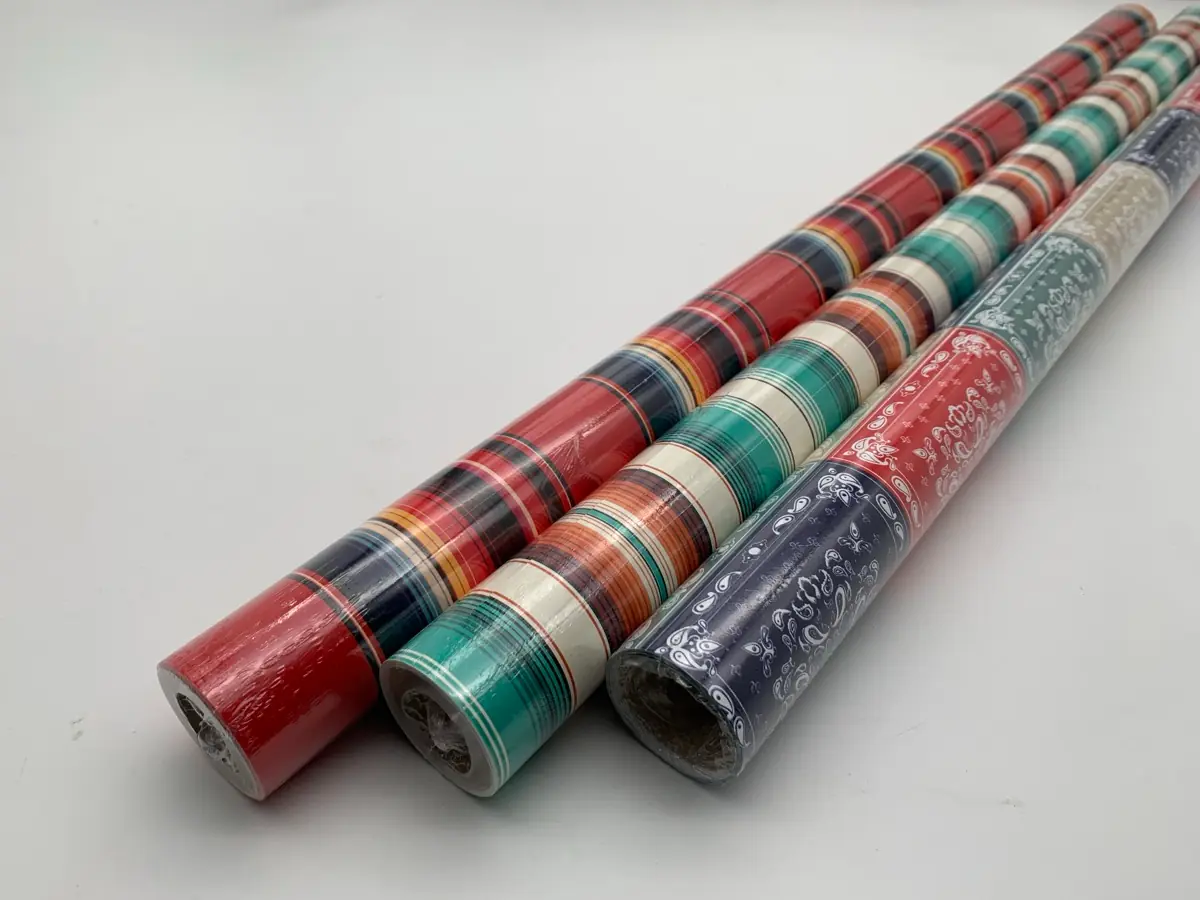
China is one of the world's largest producers of paper packaging products. Many international buyers source gift wrapping paper, tissue paper, packaging paper, paper bags, and printed packaging materials from Chinese manufacturers due to the broad range of production capabilities available. However, successful sourcing requires more than comparing prices. Buyers must evaluate suppliers, production capabilities, quality systems, and communication processes before placing an order. This guide outlines key considerations when sourcing packaging paper from China.
TL;DR
Sourcing from China is less about finding suppliers than about qualifying them. Define the specification first, separate manufacturers from trading companies, compare every quotation against one baseline, and verify quality systems with a sample before placing an order. Responsiveness during the enquiry is the earliest reliable signal of how the supply relationship will run.
Why Buyers Source Packaging Paper from China
China's paper packaging industry serves a wide range of international markets. Buyers often source from China because suppliers can provide custom printing services, large-scale production capacity, multiple paper specifications, and flexible packaging solutions. The market includes both manufacturers and trading companies, making supplier evaluation an important part of the sourcing process.
Define Your Requirements First
Before contacting suppliers, buyers should clearly define their requirements. Typical specifications may include: Product Type — gift wrapping paper, tissue paper, or packaging paper. Paper Specifications — GSM, roll size, sheet size, and paper type. Printing Requirements — number of colors, logo placement, pattern design, and surface finish. The more information provided, the easier it is for suppliers to prepare accurate quotations.
Understand The Difference Between Manufacturers And Trading Companies
Not every supplier operates a factory. Generally, suppliers may be: Manufacturers — companies that produce the product directly. Trading Companies — organizations that source products from manufacturing partners. Neither option is automatically better. However, buyers typically want clarity regarding who is responsible for production and quality management.
Request Detailed Quotations
A quotation should include more than pricing. Buyers often request information regarding product specifications, MOQ requirements, production lead times, packaging method, and printing method. Comparing quotations becomes easier when suppliers receive the same specification details.
Evaluate Manufacturing Capabilities
Different suppliers may specialize in different product categories. Questions buyers often ask include: What packaging paper products do you manufacture? What printing capabilities are available? What paper grades can be supplied? What production volumes can be supported? Understanding capabilities helps determine whether a supplier is suitable for a specific project.
Request Samples Before Ordering
Samples provide an opportunity to review paper quality, print quality, material feel, and color appearance. Physical evaluation often reveals information that specifications alone cannot provide. Many buyers request samples before approving production.
Verify Quality Control Processes
Quality management is an important part of supplier evaluation. Areas commonly discussed include: Incoming Material Inspection — verification of raw materials. Production Controls — monitoring during manufacturing. Finished Product Inspection — review before shipment. Understanding quality procedures may help buyers evaluate supplier reliability.
Understand Minimum Order Quantities
Many packaging paper manufacturers operate with minimum order quantities. MOQ requirements may vary depending on paper type, printing method, product size, and customization level. Discussing MOQ requirements early can help avoid procurement delays.
Review Communication Responsiveness
Supplier communication can significantly influence project management. Buyers often evaluate response speed, technical knowledge, quotation quality, and problem-solving ability. Clear communication can help support smoother project execution.
Discuss Packaging And Shipping Requirements
International sourcing projects should clarify packing specifications, shipping arrangements, container loading requirements, and international logistics responsibilities. These details help align expectations before production begins.
Consider Certification Requirements
Many buyers request certifications related to sustainability, material sourcing, or product compliance. If certification is required, it should be discussed during the supplier evaluation stage rather than after production begins.
Common Sourcing Mistakes
Choosing suppliers based only on price — price is only one part of supplier evaluation. Providing incomplete specifications — limited information often leads to quotation inaccuracies. Skipping sample reviews — samples help validate product suitability. Not clarifying production capabilities — capabilities should be confirmed before placing an order.
What We Have Learned From Packaging Projects
Across many packaging paper sourcing projects, one observation appears consistently. Successful sourcing usually begins with clear specifications and thorough supplier evaluation. Buyers who invest time in qualification, communication, and sample review often achieve more predictable sourcing outcomes.
Our Approach At Wise Packaging
As a packaging paper manufacturer China, Wise Packaging involves sourcing discussions that frequently cover packaging paper specifications, printing requirements, material selection, quality expectations, and production planning, because successful packaging projects depend on effective communication before manufacturing begins.
Planning, Evaluation, Communication
Sourcing packaging paper from China requires careful planning, supplier evaluation, and clear communication. By defining specifications, reviewing samples, understanding manufacturing capabilities, and discussing quality requirements early, buyers can make more informed sourcing decisions. From our experience, the most successful sourcing projects are usually built on preparation rather than price comparisons alone.
Frequently Asked Questions
Why do buyers source packaging paper from China?
Because the manufacturing base is concentrated and the range is wide: decorative wrap, tissue, kraft and greaseproof are all produced within the same region, so a programme can order several components from one source. The advantage is breadth and tooling rather than labour alone.
What information should be included in a packaging paper RFQ?
Six items: substrate and grammage, sheet width and core, print method and colour count, artwork status, the quantity per design and the delivery basis. A request that states all six receives comparable quotations; one that describes the product receives estimates that cannot be compared.
Should buyers request samples before production?
Yes. Sampling takes 5-7 working days and is the only way to see how a colour behaves on the actual paper, whether the sheet cracks at the fold and whether the sheet width suits the way the paper is used. Skipping it converts a 5-7 day step into a 10-15 day replacement run.
What is the difference between a manufacturer and a trading company?
A manufacturer runs the presses and controls the specification; a trading company coordinates suppliers and usually cannot state a grammage tolerance or a press. The practical test is whether the answer to a technical question comes with a number or with a reference to someone else.
Why are MOQs important in packaging paper sourcing?
Because a custom run carries fixed costs that do not shrink: plate or cylinder work, a make-ready, a colour approval and the mill's minimum batch. For custom-printed gift wrap those costs are covered at 500 reams per design, and below that the work is a sample rather than a production order.
What is the most common sourcing mistake?
Approving artwork before the substrate is fixed. That produces a proof that cannot be reproduced in production, and it usually surfaces at the bulk run. The second mistake is accepting a quotation that does not name the grammage, which makes two offers impossible to compare.
Need help sourcing the right paper?
Planning to source packaging paper from China? Contact WiseInco for detailed specifications, samples, and a competitive quotation.
Sales Manager at WiseInco · 15+ years in packaging paper industry
Helping global brands source FSC-certified gift wrapping, tissue, kraft, and greaseproof paper from our 50,000 m² factory in Dongguan, China. 5,000+ containers exported to 30+ countries annually.
Learn what FSC certification means for paper products, how FSC-certified paper is sourced, the different FSC labels, and what buyers should verify when…
Learn everything buyers need to know about paper GSM, including how GSM affects packaging performance, printing quality, supplier quotations, and packaging…
Custom printed paper vs standard paper: a factory-direct comparison covering cost, branding impact, production lead times, MOQ, and when to invest in custom.