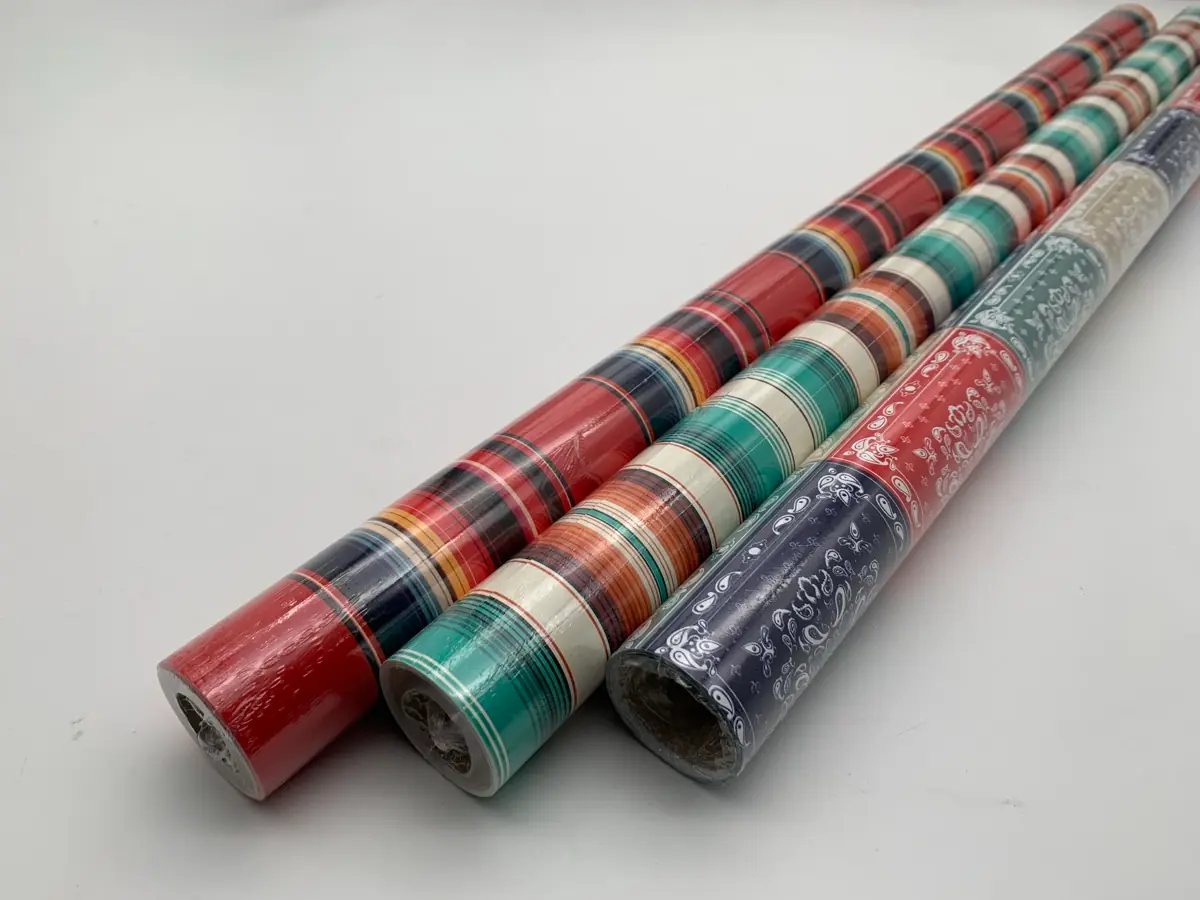
Premium Packaging Paper for Luxury Brands: Key Trends and Insights
Moving a product upmarket changes what the packaging has to do. At mass-market price points a wrap only has to survive transit and look tidy on a shelf; in a luxury context it has to justify the price before the product is even seen. Whether the item is jewellery, fragrance, spirits, cosmetics or made-to-measure apparel, the first sheet a customer peels away carries the brand's claim about quality. This guide looks at the substrate decisions that carry that claim most reliably, and at the ones that quietly undermine it.
TL;DR
Hand-feel, fold behaviour and print reproduction decide whether a wrap reads as luxury, and all three are settled by the substrate before artwork is drawn. Budget 80 to 120 gsm for most premium work and around 150 gsm where a rigid presentation is wanted; below 70 gsm the sheet creases too readily to hold a sharp corner. Every added effect such as foil, emboss or spot UV introduces its own die and raises the minimum, and EU-bound programmes also need FSC Chain of Custody evidence plus a Declaration of Conformity under Regulation (EU) 2025/40.
What Buyers Actually Judge on the Packaging Bench
Hand a luxury buyer a wrapped box and the assessment happens in a fixed order. The sheet is lifted, a corner is pressed between finger and thumb, the fold is opened and re-closed. Weight and stiffness register first, then surface: whether the material feels coated, chalky, linen-textured or slick. Only after that does anyone read the print. It is why a brief that leads with artwork and treats the substrate as an afterthought so often disappoints at hand-over.
The practical consequence is that a luxury brief should be written substrate-first. Fix the weight band and the finish, confirm how the sheet behaves folded around a rigid box, and only then commission artwork that suits that surface. Brands that reverse the order usually end up re-printing, because a fine-line metallic pattern that looks elegant on a monitor disappears into a deep linen emboss. Our guide to choosing premium gift wrapping paper walks through the same sequence in more detail.
Weight and Hand-Feel: Where Premium Perception Starts
Grammage is the fastest lever a brand can pull and the one most often left to default. A 60 gsm sheet is perfectly serviceable for volume wrapping; the same design at 100 gsm feels like an object rather than a wrapper. The bands below show how weight usually maps onto finish and end use across the ranges we convert most often.
Weight band
Typical finish
Where it is normally specified
Hand-feel
60–70 gsm
Uncoated or lightly coated
Volume retail wraps, void fill and interleaving
Light, creases readily, suits simple repeats
80–100 gsm
Coated, soft-touch or fine texture
Gift wraps for fragrance, jewellery and apparel
Crisp folds, holds a crease, reads as premium
100–120 gsm
Textured, matt or foil-ready
Rigid box wraps and boutique programmes
Substantial and more forgiving in handling
around 150 gsm
Heavy matt or embossed
Heavily branded presentations, limited editions
Board-like, needs score lines at the corners
Finishes That Carry the Brand Signal
Finish is where a premium programme is usually won or lost, because it is the part of the specification a buyer feels rather than sees. It also drives tooling, which means it drives minimum order quantity. A plain matt surface needs nothing beyond the print plates; each added effect introduces another set-up step and, in most factories, another reason for a minimum to rise.
The finishes below turn up most often in high-end briefs. They can be combined, but every combination should be tested on the intended stock before the artwork is finalised, because effects interact: a foil that reads crisply on an uncoated sheet can look flat once a soft-touch coating sits over it. Our guide to how paper finish affects packaging paper performance covers those interactions in more depth.
Soft-touch matt coating — velvety hand-feel that absorbs light and photographs well, but shows fingerprints
Foil stamping — metallic or holographic; needs a die and a separate hot-stamping pass
Blind or registered emboss — dimensional relief without ink, subtle under raking light
Spot UV over matt — gloss contrast on a matt field, best kept to one or two motifs
Textured and linen stocks — the texture is in the sheet itself, so no extra pass is required
Print Reproduction on Heavier and Coated Stocks
Heavier sheets take ink differently. On a 100 gsm coated stock the ink sits on the surface and dries with high gloss; on an uncoated 80 gsm sheet it partly absorbs, which deepens the tone and softens fine detail. Neither is better, but the same artwork file will not deliver the same result on both, and a brand running a mixed range has to accept that or standardise the stock.
Colour also drifts more visibly on premium work because the tolerances are tighter. A large flat field of deep navy or burgundy is the hardest thing to hold consistent across a run, and it is exactly the kind of colour luxury identities use. Setting a measured target with a numeric tolerance at sampling stage, rather than approving on a monitor, is the single most effective control. Our notes on colour management in packaging paper printing and on reducing colour differences on custom printed wrapping paper explain how a target is set and then held.
Sustainable Luxury Is Now a Specification, Not a Story
A decade ago recycled fibre in a luxury wrap needed an explanation. Today it is often the default expectation, and in Europe it is increasingly a legal baseline rather than a marketing choice. The EU Packaging and Packaging Waste Regulation, Regulation (EU) 2025/40, has applied its core obligations since 12 August 2026 and it covers paper packaging of every grade: substance limits, recyclability obligations and an EU Declaration of Conformity the manufacturer must be able to issue and retain. Our PPWR buyer's guide lists the thresholds and the documents to request.
Fibre sourcing is a separate question with its own paperwork. An FSC Chain of Custody certificate, such as WiseInco's ESTS-COC-200766, shows the pulp is traceable from certified and controlled sources through to the finished roll. For a luxury brand the value is not the label on the wrap but the audit trail behind it, which is the evidence a retailer's compliance team will eventually ask for. Our FSC certification guide for paper products explains what the scope covers.
Heavy metals — lead, cadmium, mercury and hexavalent chromium limited to 100 mg/kg across the packaging, inks and coatings included
PFAS — food-contact paper must meet the 25 ppb, 250 ppb and 50 ppm thresholds depending on how it is measured
Recyclability — design obligations have applied since 12 August 2026, with graded thresholds phasing in later
Declaration of Conformity — manufacturers must issue an EU DoC and retain the technical file for five years
Tooling, Minimums and the Cost of Small Luxury Batches
Premium programmes are often small and highly specific, which puts them at odds with how paper converting is priced. Every added finish carries a fixed cost: a foil die, an emboss die, a spot-UV screen. Those costs are divided across the run, so 500 sheets of a foil-stamped embossed wrap absorb a per-sheet tooling burden that a plain printed wrap of the same size simply does not.
The practical response is to concentrate tooling rather than spread it. One shared die across several SKUs, one standard sheet size, one finish that carries the brand instead of three that compete, all reduce the number of fixed costs the run has to absorb. Our explainer on why an MOQ exists for custom wrapping paper sets out how those costs are calculated, and it is worth running a pre-production sample before any die is cut.
Print plates or cylinders are charged once per design, not per colourway change
Foil and emboss dies sit outside print tooling and are quoted individually
Sampling runs 5–7 working days; bulk production follows in 10–15 working days after proof approval, with freight quoted separately
Specifying a Luxury Grade: Six Decisions to Lock First
A premium specification fits on a single page if the decisions are taken in the right order. Lock these six before artwork begins and the rest of the project becomes a production exercise rather than a negotiation.
Weight band — 80–120 gsm for most gift programmes, up to 150 gsm for rigid presentations
Base finish — coated, soft-touch, textured or uncoated, chosen for hand-feel rather than unit cost
Added effects — foil, emboss and spot UV, each with its own die and set-up
Format — sheet size, and whether the wrap ships flat, on the reel or pre-cut
Colour target — a measured reference plus a numeric tolerance agreed at sampling
Compliance package — FSC Chain of Custody and, for EU-bound goods, an EU Declaration of Conformity
Conclusion
A luxury wrap is a specification problem before it is a design problem. Weight, finish and print reproduction decide whether the paper feels like it belongs to the product; artwork then decides whether it looks like it does. Brands that treat the substrate as a fixed constant and iterate on design alone tend to pay for that twice, first in samples and then in re-runs.
The reassuring part is that none of this is exotic. The same gift wrapping paper, tissue paper and white kraft paper grades used across mainstream retail are available in premium weights and finishes; what changes is the specification, the sampling discipline and the compliance paperwork. If you would rather judge the options on paper than on screen, our team can send samples against your brief.
Frequently Asked Questions
What grammage should a luxury wrap be specified in?
Most premium gift wraps sit between 80 and 120 gsm, with heavier presentations going to about 150 gsm. Below 70 gsm the sheet creases too readily to hold a sharp corner on a rigid box. The right figure depends on whether the wrap is used on a flat box, a soft pouch or a bottle.
Do luxury finishes increase the minimum order quantity?
Yes. Foil stamping, embossing and spot UV each need their own die or screen, and those are fixed costs spread across the run. A design requiring two or three added effects will normally carry a higher minimum than a plain printed wrap in the same sheet size.
Can recycled fibre deliver a premium hand-feel?
It can. Modern recycled and FSC-certified stocks are produced in the same weights and with the same coatings as virgin grades, and the difference is usually invisible in the hand. What does need checking is run-to-run shade consistency, which is agreed at sampling rather than assumed.
How long do sampling and production take?
A pre-production sample usually takes five to seven working days. Once that sample is approved, bulk production typically runs in ten to fifteen working days, with freight quoted separately from the paper itself.
Does EU packaging law apply to a luxury gift wrap?
Yes, if the wrapped goods are placed on the EU market. Regulation (EU) 2025/40 has applied its core obligations since 12 August 2026, covering heavy-metal limits of 100 mg/kg, PFAS thresholds for food-contact paper, recyclability obligations and an EU Declaration of Conformity.
What should be agreed in writing before a premium print run?
The weight band and base finish, the number of added effects and who pays for the dies, the sheet size and supply format, the measured colour target with its tolerance, and the compliance documents: FSC Chain of Custody plus, for EU-bound goods, the Declaration of Conformity.
Building a packaging experience, not just a box?
Browse more packaging insights and real brand examples on the blog.
Sales Manager at WiseInco · 15+ years in packaging paper industry
Helping global brands source FSC-certified gift wrapping, tissue, kraft, and greaseproof paper from our 50,000 m² factory in Dongguan, China. 5,000+ containers exported to 30+ countries annually.